Short answer
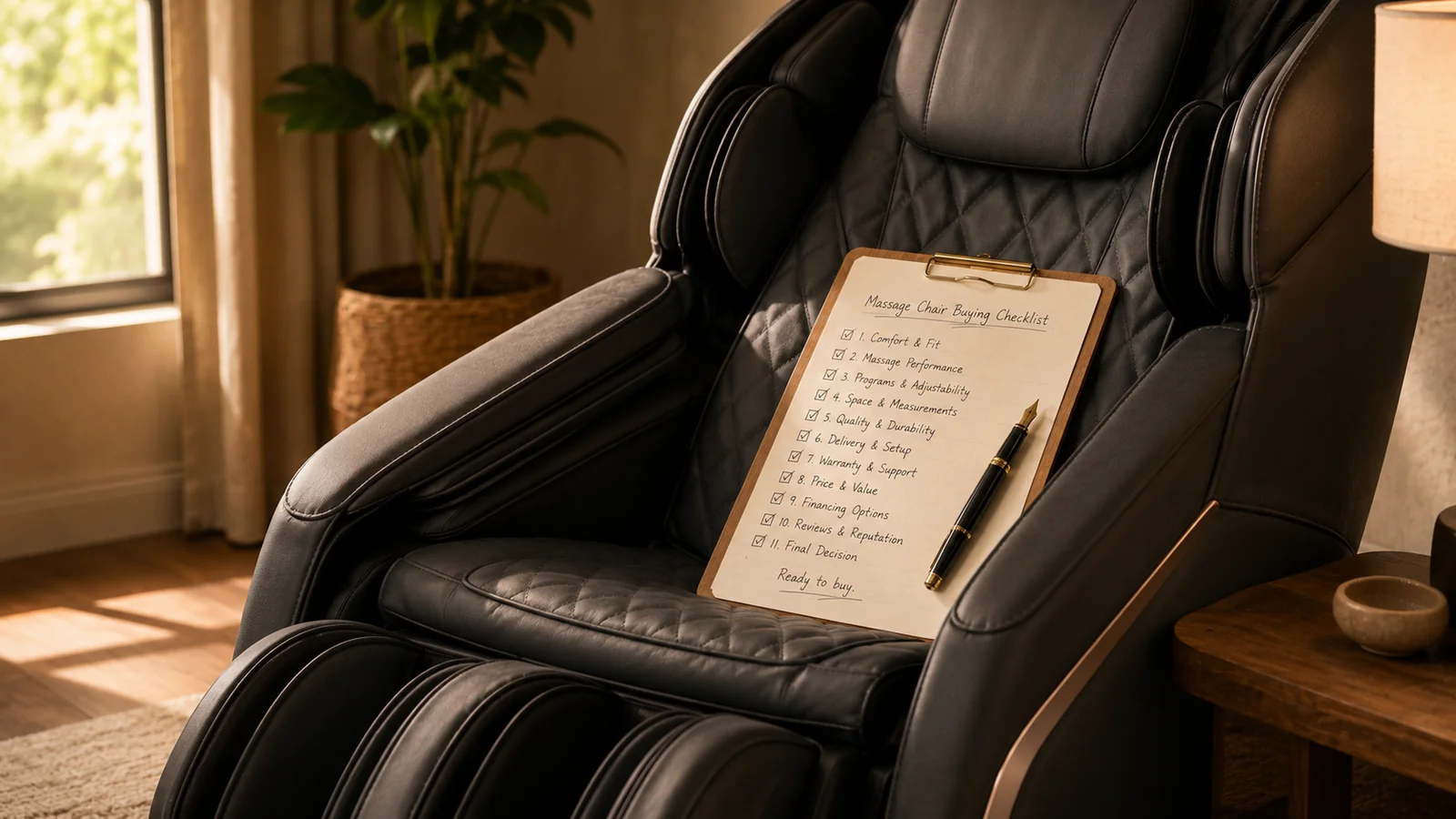
Before buying a massage chair, compare how it feels in your body, whether you can test it in person, who handles warranty and service, how delivery and installation work, what reviews actually say, which claims need evidence, and whether the total ownership cost makes sense. This massage chair buying checklist walks through each of those — what to ask, what to check, and what “good” looks like — so you can decide calmly, with no sign-up and nothing to buy here.
Key takeaways
- Treat this as a reasoning tool, not a scoring system — the goal is to notice where you don’t yet have an answer before money changes hands.
- Comfort and body fit are personal and physical; they’re the hardest things to judge from a listing and the easiest to judge in person.
- Retailer transparency, clear warranty terms, and dependable service often matter more over the years you’ll own the chair than any single feature.
- Read health and wellness language cautiously: a massage chair is for comfort and relaxation, not for diagnosing or treating any condition.
How to use this massage chair buying checklist
You can use this massage chair buying guide however suits you: read it once before you start, keep it open while you shop online, or bring it into a showroom. Each section has the same shape — why it matters, what to check, and a quick sense of what good looks like. Tick items as you confirm them; a gap on warranty, service, or delivery is exactly the kind of thing worth resolving before you commit. Your ticks are saved on this device only, with no account and no email.
Start by choosing the situation closest to yours — each one points you to the sections that matter most right now.
I’m buying online
You’re trusting photos, reviews and return terms. Weight reviews, returns, delivery and comfort risk.
Start with reviewsI’m visiting a showroom
You can test fit and pressure firsthand. Make the visit count and avoid being rushed.
Start with showroom testingI’m comparing brands
Several names keep reappearing. Compare them the same way, on the same practical criteria.
Start with brands & modelsI’m buying for someone else
Their body and their space decide fit. Check height, reach and where the chair will live.
Start with comfort & fitI’m worried about warranty or service
You may rely on the seller for years. Confirm coverage, repairs and who actually picks up the phone.
Start with warranty & serviceI’m researching wellness claims
Some marketing sounds medical. Learn to separate comfort language from treatment-style promises.
Start with claim safetyKey terms
- Try-before-buy
- Sitting in the exact model you’re considering, for long enough to judge fit, pressure and recline, before you commit.
- Retailer trust
- How transparent and accountable a seller is — a clear identity, written policies, honest claims, and a real path to service after the sale.
- Review interpretation
- Reading reviews for patterns and separating feedback about the product from feedback about the retailer and about delivery or service.
- White-glove delivery
- Delivery that includes bringing the chair to the room of your choice, full assembly, and removal of the packaging.
- Total ownership cost
- The full cost of owning the chair over time — the purchase price plus delivery, installation, any optional warranty, and service.
- Responsible wellness language
- Marketing that describes comfort, relaxation, and temporary relief of minor muscle tension without promising to treat, cure, or prevent any condition.
Comfort and body-fit checklist
This is the foundation, and the one thing a listing genuinely can’t show you. A chair built for a six-foot frame can feel wrong for a five-foot-two frame, and the other way around. Use this section to judge what to look for in a massage chair for your body — shoulder alignment, lower-back pressure, foot and calf fit, recline comfort, and whether the controls make sense.
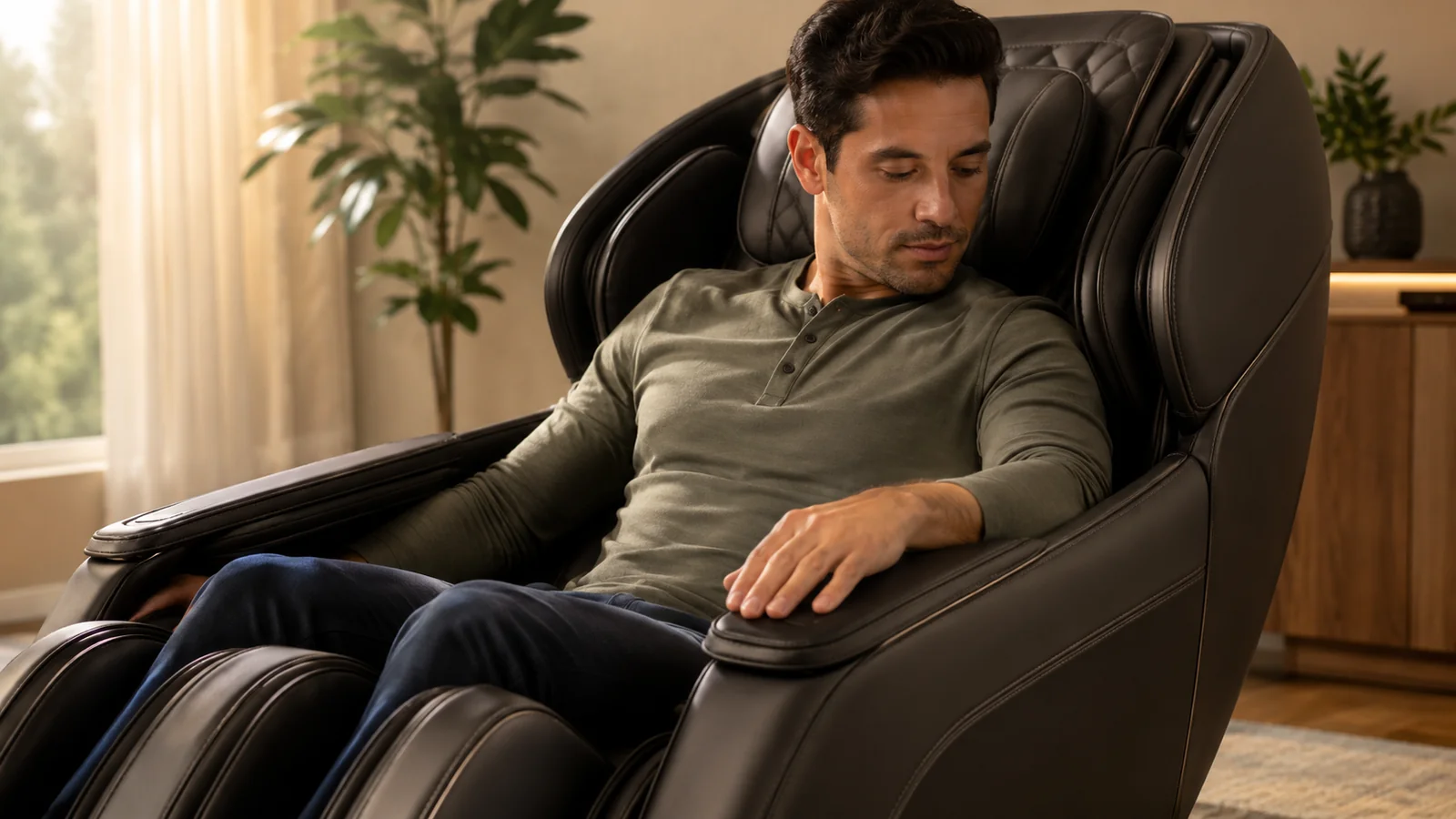
Tick items as you confirm them. Progress is saved on this device only — no account, no email.
What good looks like: you can sit unhurried for several minutes without fidgeting, the rollers track your spine rather than your shoulder blades or hips, and you step out looser rather than poked. Fit is personal — if you can, try a chair before buying .
Showroom and try-before-buy checklist
Testing in person is the most reliable way to reduce comfort risk on a high-ticket purchase. A good visit lets you feel the fit, compare more than one chair, and ask questions without pressure. These are the massage chair showroom checklist items worth confirming before and during a visit.
Questions to ask in a showroom
Retailer trust checklist
You may rely on the seller for warranty and service for years, so retailer trust matters as much as the chair itself. This massage chair retailer checklist focuses on transparency — clear identity, written policies, honest claims, and a real path to support after the sale.
Warranty and service checklist
Massage chairs are mechanical, and parts wear. A warranty’s value lives in its details — what’s covered, for how long, and who actually performs and pays for repairs. These are the massage chair questions before buying that protect you years from now.
Questions to ask about warranty and service
Delivery, installation and space-fit checklist
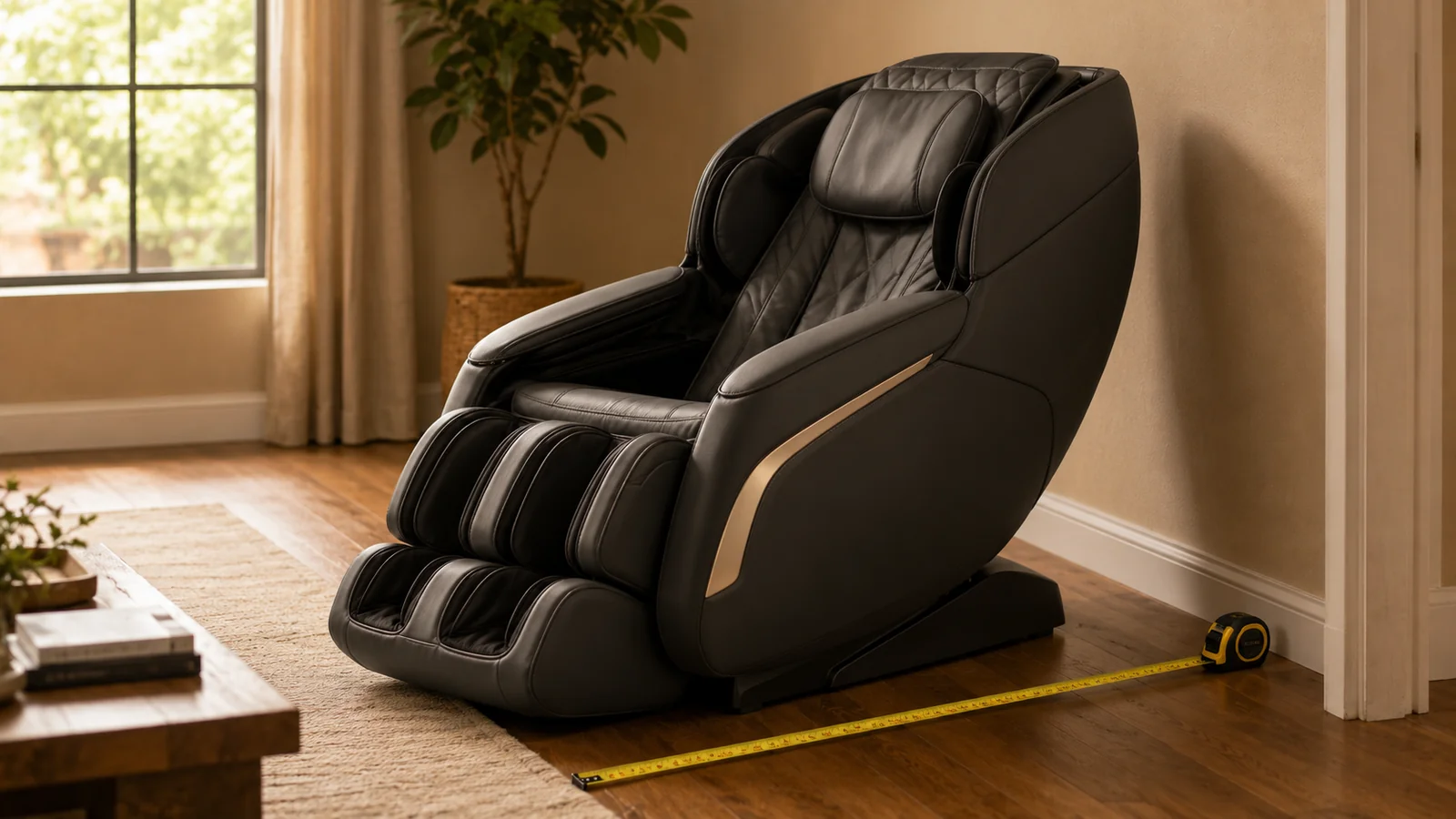
These chairs are heavy and bulky — often well over a hundred pounds in a large box — and many recline backward, so they need room behind them. Confirm the chair will reach its spot and fit your space before you order.
Review interpretation checklist
Reviews are useful but incomplete. A wall of five-star ratings tells you less than a handful of detailed accounts, and many reviews mix up the chair, the retailer, and the delivery and service experience. Read for patterns, and notice which of the three a review is really about.
- Product reviewsHow the chair feels, fits, sounds and holds up over time.
- Retailer reviewsHow the seller communicates, prices, and stands behind the sale.
- Delivery & service reviewsHow delivery, installation and later repairs actually went.
Online vs showroom buying checklist
Both routes can work; they simply trade off differently. Buying online is convenient and can offer broader selection, while a showroom lets you test fit and pressure firsthand. Whichever door you choose, the questions that protect a high-ticket purchase stay the same.
Buying online
In a showroom
Brand and model comparison checklist
The same brand names reappear across showrooms and listings. Recognizing them helps, but a fair massage chair comparison checklist treats every brand the same way — on fit, warranty, service, reviews and current availability — rather than on marketing.
Questions to ask before choosing a brand or model
Brands you may come across while comparing include:
- Osaki
- Infinity
- Panasonic
- OHCO
- D.Core
- Positive Posture
- Koyo
- Ogawa
- Kyota
- Cozzia
- Bodyfriend
- Human Touch
Listed alphabetically to help you recognize the market — not ranked, not endorsed, and not all tested. Compare any brand against the same criteria above.
Medical-sounding claim checklist
A massage chair can feel relaxing and may offer temporary relief of minor muscle tension, but it is not a medical device. This is where calm skepticism pays off. Use this section to tell comfort language apart from treatment-style claims — and to know what to ask for.
A note, not a warning
Be cautious with any claim that a chair treats, cures, or prevents conditions, improves circulation, or is “clinically proven,” “doctor recommended,” “FDA approved” or “medical-grade.” Those phrases are a reason to ask questions, not a feature. If you have a diagnosed condition, consult a healthcare professional before using a massage chair.
Questions to ask about health or wellness claims
“Designed for comfort and relaxation; may help you unwind and ease minor muscle tension.”
Describes comfort, sets fair expectations.“Clinically proven to treat back pain and improve circulation — doctor recommended.”
Treatment-style and absolute; ask for evidence.Massage chairs should be evaluated for comfort, relaxation, pressure preference, body fit, and temporary relief of minor muscle tension. They should not be treated as a substitute for medical diagnosis or treatment.
Price, financing and total ownership checklist
The sticker price is rarely the whole cost. Delivery, installation, optional warranties and service all add up, so compare the total ownership cost across similar service levels rather than the headline number alone.
Final pre-purchase checklist
Before you buy — online or in a showroom — confirm you can tick every line below. If one is missing an answer, that’s the question to resolve first.
Before you go
Save this checklist before visiting a showroom
Keep it with you while you shop. Save or print a clean copy — no email, no sign-up, nothing to buy.
Your ticked items are stored on this device only. We never ask for your email to use this checklist.
How we keep this checklist consumer-first
This checklist is built from consumer decision criteria, not sales goals: showroom testing logic, retailer transparency, warranty and service clarity, review interpretation, responsible claim language, and total ownership value. We are an independent guide — we don’t sell chairs, run a showroom, or take payment to rank or feature anyone.
Planning to try chairs in person?
If you want to test before you buy, these guides explain what to look for locally — what to compare, not where to shop. They’re guidance, not directories.
California showroom guidance
What makes a California massage chair showroom worth visiting, and how to compare before you go.
California guidanceBay Area showroom guidance
How to evaluate showrooms across the Bay Area — including Santa Clara, San Jose and the wider valley — using one neutral checklist.
Bay Area guidanceFrequently asked questions
What should I ask before buying a massage chair?
Ask how it fits your body, whether you can test the exact model, what the warranty covers and for how long, who performs and pays for repairs, how delivery and installation work, what reviews say about the product and the service, what evidence supports any health claims, and what the total ownership cost is. Clear, written answers are a good sign.
What should I look for in a massage chair?
Look first at comfort and body fit: shoulder alignment, lower-back pressure, foot and calf fit, recline comfort, and adjustable intensity. Then look at controls you can use easily, a clear warranty, dependable service, sensible delivery, and honest claims. Features only matter if you’ll actually use them, so weigh fit and support over a long spec sheet.
Should I try a massage chair before buying?
If you can, yes. Comfort and fit are personal and physical, and they’re the one thing a listing can’t show you. Sitting in the exact model for a few unhurried minutes reveals pressure, recline and fit far better than specs. If a showroom visit isn’t possible, lean on a strong return policy and detailed reviews instead.
What are common massage chair buying mistakes?
Common mistakes include buying on specs without checking fit, skipping warranty and service questions, overlooking delivery access and room clearance, trusting a wall of generic five-star reviews, being rushed by pressure to decide today, comparing prices at different service levels, and taking medical-sounding claims at face value. Working through a checklist helps you avoid each one.
What warranty questions should I ask?
Ask exactly what the warranty covers and for how long, since the frame, parts and labor often differ. Confirm whether labor and a technician’s travel are included, whether in-home service is available, who handles support, whether parts are available for your model, how a claim is made, and whether the terms are written in plain language.
What delivery questions should I ask?
Confirm whether delivery is curbside or to the room of your choice, whether assembly is included, and whether white-glove delivery is offered. Check that the boxed chair fits your doorways and any stairs, what room clearance the chair needs to recline, what happens if delivery fails or arrives damaged, and whether all delivery costs are clear in writing.
Should I buy a massage chair online or in a showroom?
Both can work. A showroom lets you test fit and pressure firsthand, which is hard to replace. Buying online is convenient and sometimes offers more selection, but relies on photos, reviews and a strong return policy. The right choice depends on whether you can try your exact model and how generous the return terms are.
How do I compare massage chair retailers?
Compare transparency and support. Look for a clear business identity, a real showroom or a transparent buying process, recent and detailed reviews, clearly explained warranty and service responsibilities, written delivery and pricing terms, responsible wellness language, and a named path to help after the sale. Vague answers now tend to become problems later.
How do I compare massage chair brands?
Compare brands the same way, on the same criteria: body fit, similar price ranges, genuinely useful features, the ability to test each model, warranty terms, service and support, reviews of the exact model, whether the model is current, and local support. Recognizing brand names helps, but no brand should get a pass on these practical questions.
What medical claims should I be careful with?
Be cautious with claims that a chair treats, cures or prevents conditions, improves circulation, or eases diagnosed problems like neuropathy or arthritis, and with phrases like “clinically proven,” “doctor recommended,” “FDA approved” or “medical-grade.” A chair is for comfort, relaxation and temporary relief of minor muscle tension. For any diagnosed condition, consult a healthcare professional.
One last step
Decide calmly, on your own terms
Save this checklist before visiting a showroom or buying online — then feel a chair for yourself and confirm the seller is straight with you.
Last updated: July 2026 · Editorial standards · Disclosure