I'm just starting out
Get a plain-English overview before you compare anything specific.
See the buying checklistIndependent Buying Guide
A Consumer Guide to Buying a Massage Chair Safely and Confidently
This massage chair buying guide is independent and consumer-first: we don't sell chairs, we help you compare them. A massage chair is a high-ticket purchase, so we walk you through how a chair feels for your body, who you're buying from, and what happens after delivery — so you can decide with more buyer confidence. When we describe what to test, we mean what you should test; we explain our methods openly.
Last updated: July 2026
Your buying decision
The Short Answer
A massage chair is a high-ticket purchase, so the most useful thing you can do before buying is slow down and compare on a few practical fronts: how the chair actually feels for your body, who you're buying it from, and what happens after delivery. Whenever possible, try a chair in person to judge fit, intensity, and comfort, and read reviews by separating comments about the product from comments about the retailer, delivery, and service. Treat any health or wellness claims cautiously — ask what evidence supports them, and consult a healthcare professional about any diagnosed condition. This guide walks through each of those steps so you can decide with more confidence.
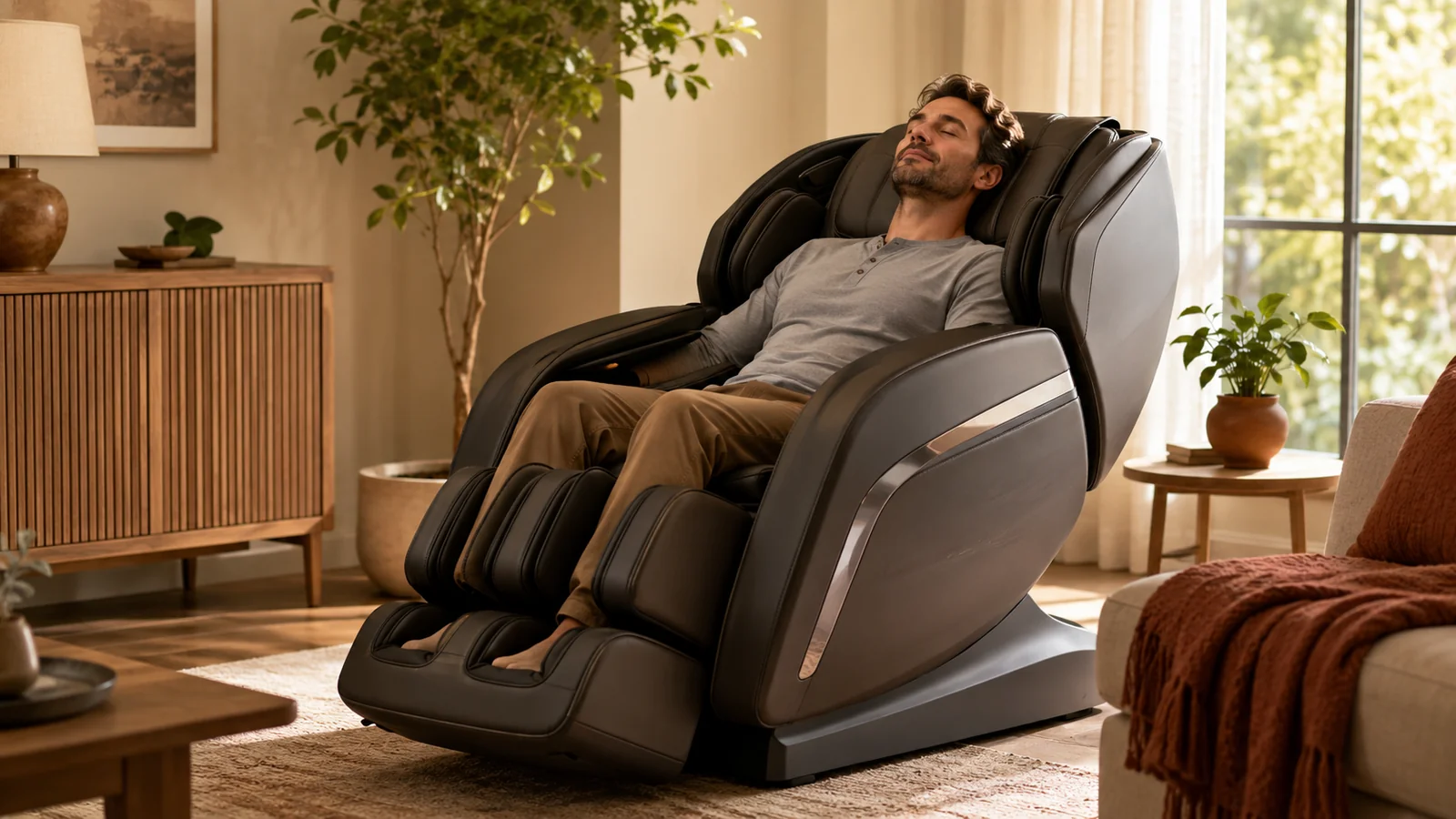
The Trailhead
Not sure where to begin? Pick the description that fits you best — each path leads to a focused, independent guide so you can move at your own pace.
Get a plain-English overview before you compare anything specific.
See the buying checklistSee the names you may encounter and a fair way to compare them without rankings.
How to approach massage chair brandsSeparate comments about the product from the retailer and delivery.
How to read massage chair reviewsSee how to interpret wellness and medical-sounding claims and what to ask about evidence.
Understand massage chair claim languageWeigh the trade-offs so you can choose your route.
Compare buying online vs. in a showroomCompare local showrooms, online retailers, authorized sellers, brand availability, warranty, delivery, service and try-before-buy access.
Compare buying optionsLearn why a showroom visit helps and what comfort, fit, and intensity tell you.
Why try a massage chair before buyingUnderstand what to ask about coverage, repairs, delivery, and support.
Review warranty and delivery questionsFind what to look for near you, starting with California and the Bay Area.
California showroom guidance · Bay Area showroom guidanceLast updated: July 2026
The Checklist
A massage chair is a high-ticket purchase, so it helps to compare on a few practical fronts rather than moving fast. Our buying checklist groups the decision into nine themes — covering how the chair feels, who you buy it from, and what happens after delivery — so you can walk into a showroom or open a listing already knowing what to look for.
No sign-up required to read the checklist.
Tick what matters to you as you read — it's a thinking tool, not a sign-up. Nothing is saved or sent.
Key Takeaways
Trying in Person
The Short Answer
Whenever possible, yes. Because a massage chair is a high-ticket purchase, testing it in person lets you judge comfort, body fit, and pressure preference before you commit. Comfort is highly individual, so a chair with great specs may suit one person and not another. If a showroom visit isn't possible, look for a clear return window and good setup support so you can still evaluate the chair at home with less risk.
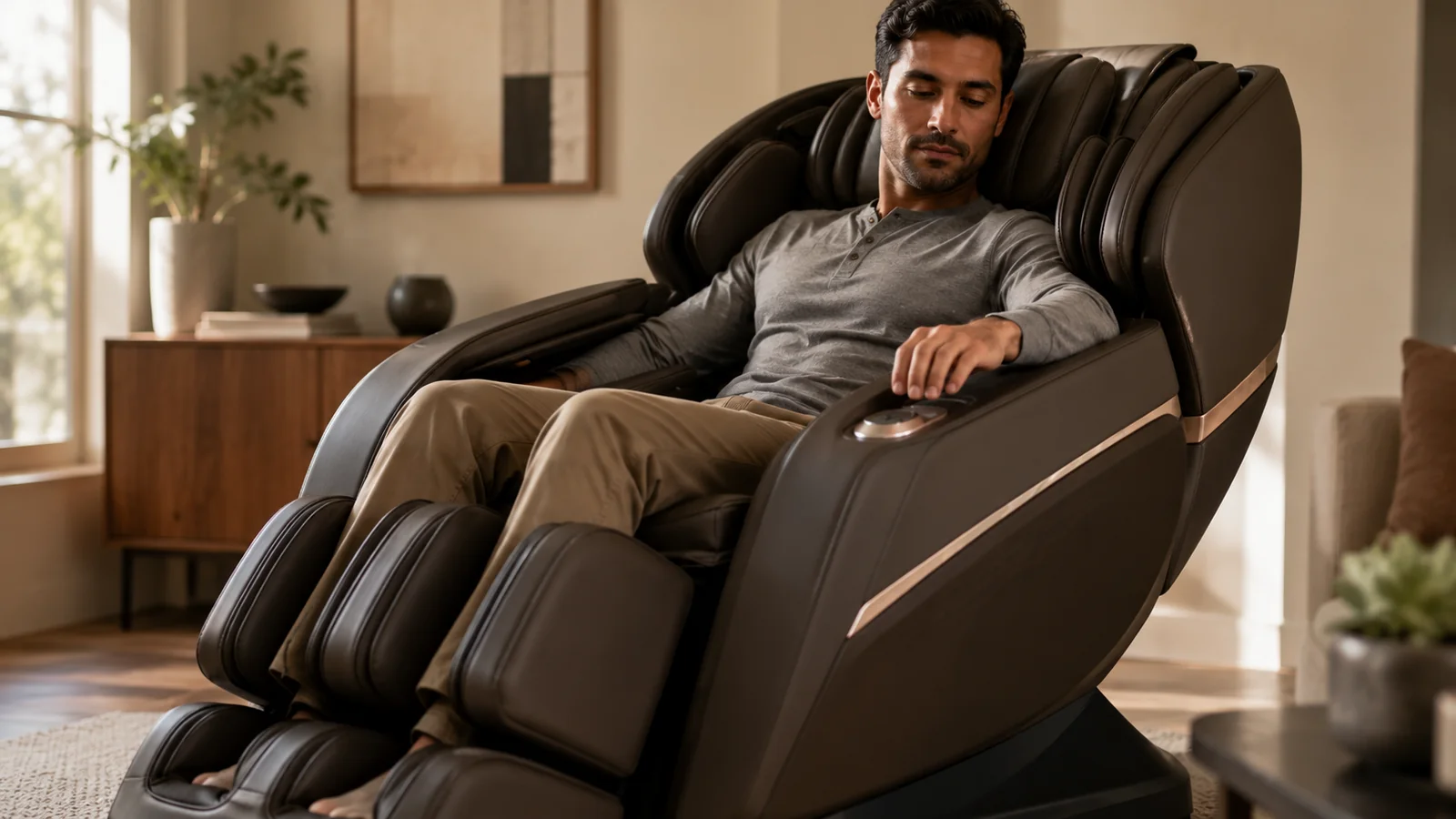
Fit is personal. Sit a full program and test each checkpoint against how you are built — not how a showroom looks. Hover or tap a checkpoint to highlight it on the chair.
Whether recline and seat width suit your height and build.
Whether pressure feels comfortable at the levels you'd actually use.
How the chair positions you through a full program.
Whether the seat suits your build comfortably.
Whether the foot extension matches your legs.
How your body settles after a few minutes, not just the first.
Key Takeaways
Showroom Standards
Look for clear warranty and service information, knowledgeable staff, chairs you can actually test, and transparent retailer details. These are standards to look for — not a verdict on any specific store.
| Standard | What a strong showroom does |
|---|---|
| In-person testing | Lets you sit and run chairs through a full program |
| Warranty clarity | Explains coverage, length, parts and labor plainly |
| Service transparency | Says who performs repairs and how requests are handled |
| Delivery terms | Explains whether in-home setup is included |
| Claim language | Describes comfort honestly without medical-sounding promises |
| Staff knowledge | Answers body-fit and program questions clearly |
Choosing a Retailer
Look for transparency and support: clear pricing, honest product and wellness claims, accessible customer service, and a verifiable track record. Because you may rely on that seller for warranty and service for years, retailer trust is worth weighing alongside the chair itself.
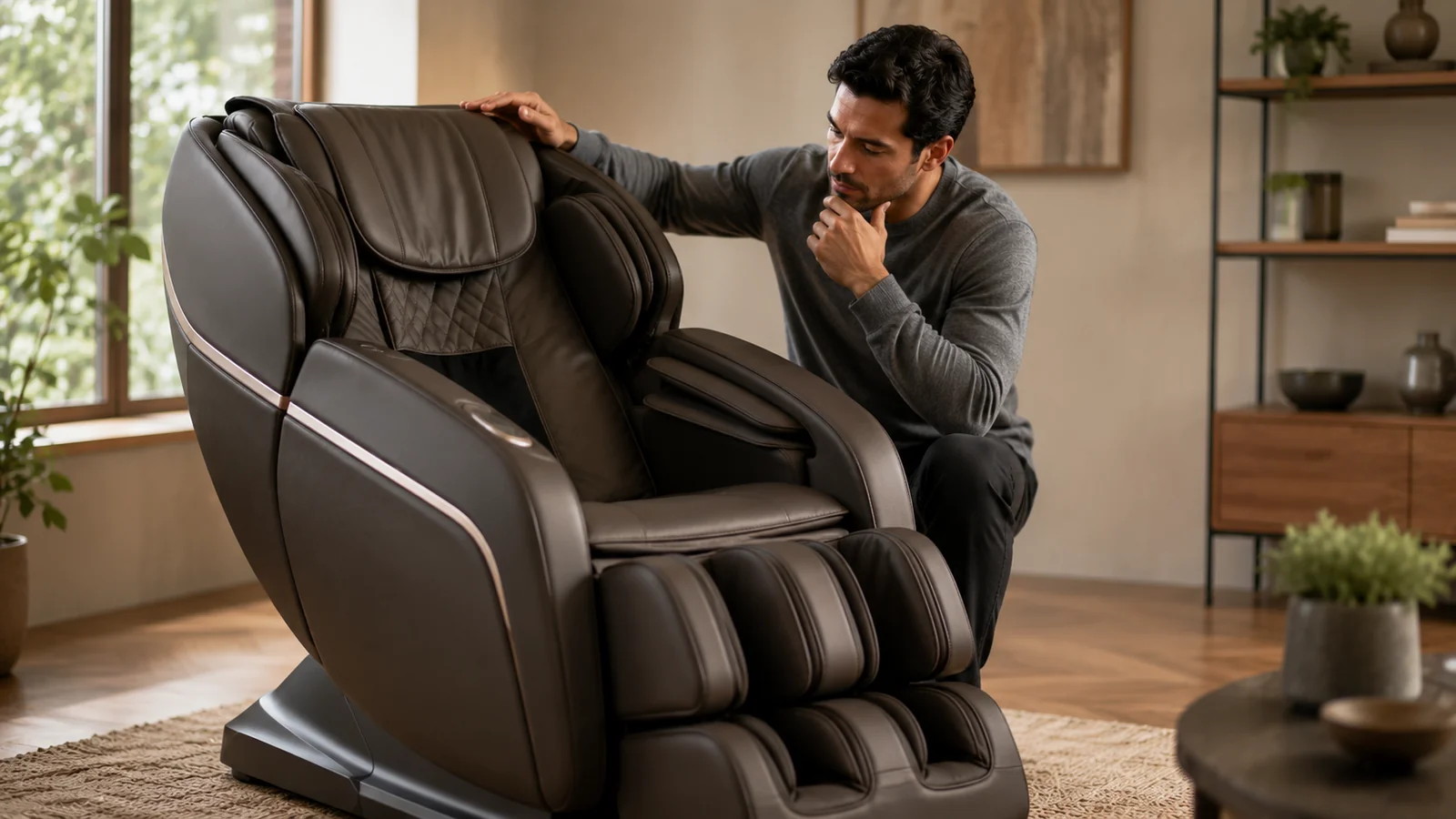
Reading Reviews
Massage chair reviews are useful, but a single star rating rarely tells the whole story. The most reliable way to read them is to separate three things people are actually reviewing: the chair itself, the retailer you'd buy from, and how delivery and after-sale service went. Read for patterns across many reviews, favor recent and detailed ones, and remember that reviews can describe a chair but cannot prove how it will fit your body.
Look for patterns rather than reacting to any one comment. Several reviewers describing the same recline issue, responsive support, or delivery problem is more meaningful than a lone five-star or one-star post. Verified, detailed reviews usually tell you more than short or anonymous ones, and recent reviews reflect current models, service, and the ownership experience more accurately.
One thing reviews genuinely cannot do is prove comfort or body fit for you. Comfort is highly individual — height, build, and pressure preference all change how a chair feels — so treat reviews as a way to surface questions and spot red flags, not a substitute for sitting in a chair yourself when that's possible.
| Type of review | What it tells you | What to watch for |
|---|---|---|
| Product reviews | How the chair feels and performs day to day — rollers, recline, programs, overall comfort | Comfort is personal, so weigh many opinions rather than one |
| Retailer reviews | How the seller communicates, prices, and handles problems | Separate the seller's behavior from the chair's quality |
| Delivery reviews | Whether delivery and in-home setup went smoothly | A rough delivery isn't always a sign of a bad chair |
| Service & support reviews | How warranty claims and repairs are handled over time | Recent reviews reflect current support best |
A star rating blends all of these into one number. Reading the categories separately usually tells you more than the score alone.
Both can work, and neither is automatically better — they trade off differently. A showroom lets you judge comfort, body fit, and pressure preference in person, while buying online can offer convenience and a wider range of brands and models. Many buyers test a chair in a showroom first and then decide where to purchase. Whichever route you choose, the questions that protect a high-ticket purchase stay the same: how the chair feels, who you're buying from, and what return, delivery, and service support exists afterward.
| Consideration | In a showroom | Online |
|---|---|---|
| Comfort & body fit | Test in person before deciding | Judged from specs, photos, and reviews |
| Selection | Limited to floor models on hand | Often a wider range of brands and models |
| Convenience | Requires a visit | Shop from home on your own schedule |
| Trying before buying | Direct hands-on testing | Depends on the return window |
| Delivery & setup | Often arranged in person | Confirm whether setup is included |
| If something goes wrong | Talk to staff directly | Relies on remote support and return policy |
| Best suited to | Buyers who value testing fit firsthand | Buyers who value range and convenience |
Compare buying online vs. in a showroom
Key Takeaways
Reading Claim Language
Margin Note · read the words on the box
Massage chairs are often marketed with wellness language, and it helps to read that language calmly. Comfort and relaxation are reasonable things to evaluate — how the chair feels, your pressure preference, and your body fit are all fair to judge for yourself. Specific health-sounding promises deserve more scrutiny: it's reasonable to ask what evidence supports a claim before you rely on it. A massage chair is meant for comfort and relaxation rather than medical care, so it shouldn't replace advice or treatment from a healthcare professional — for any diagnosed condition, talk to a qualified professional.
There's a meaningful difference between describing comfort and making a medical-sounding claim. Responsible wellness language talks about relaxation, comfort, and the temporary relief of minor muscle tension without overstating what a chair can do. Medical-sounding claims go further — wording that implies a chair can treat a condition or address a specific diagnosis. When you see that kind of language, treat it as a prompt to slow down and ask questions, not as a finding to take at face value.
“Designed for comfort and relaxation; may offer temporary relief of minor muscle tension.”
Modest, honestly worded — reasonable to consider for comfort.Wording that implies a chair can treat a condition, address a diagnosis, or replace medical care.
Worth pausing on — ask what evidence supports it before relying on it.Asking these questions isn't about distrusting every seller. It's simply how a careful buyer keeps comfort language and medical-sounding claims in their proper places.
Key Takeaways
This section is general consumer education, not medical advice.
If You're Shopping Locally
If you're shopping locally, our regional guides explain what to look for in a massage chair showroom and how to evaluate one before you visit — they're guidance, not a directory of specific stores, and not places we operate or endorse. The same standards apply wherever you live: can you actually test the chairs, is warranty and service information clear, and are the people knowledgeable and transparent? We start with broad guidance for California and the Bay Area.
Statewide guidance on what makes a showroom worth a visit and how to compare options before you go.
A closer look at evaluating showrooms across the Bay Area, using the same neutral checklist you'd apply anywhere.
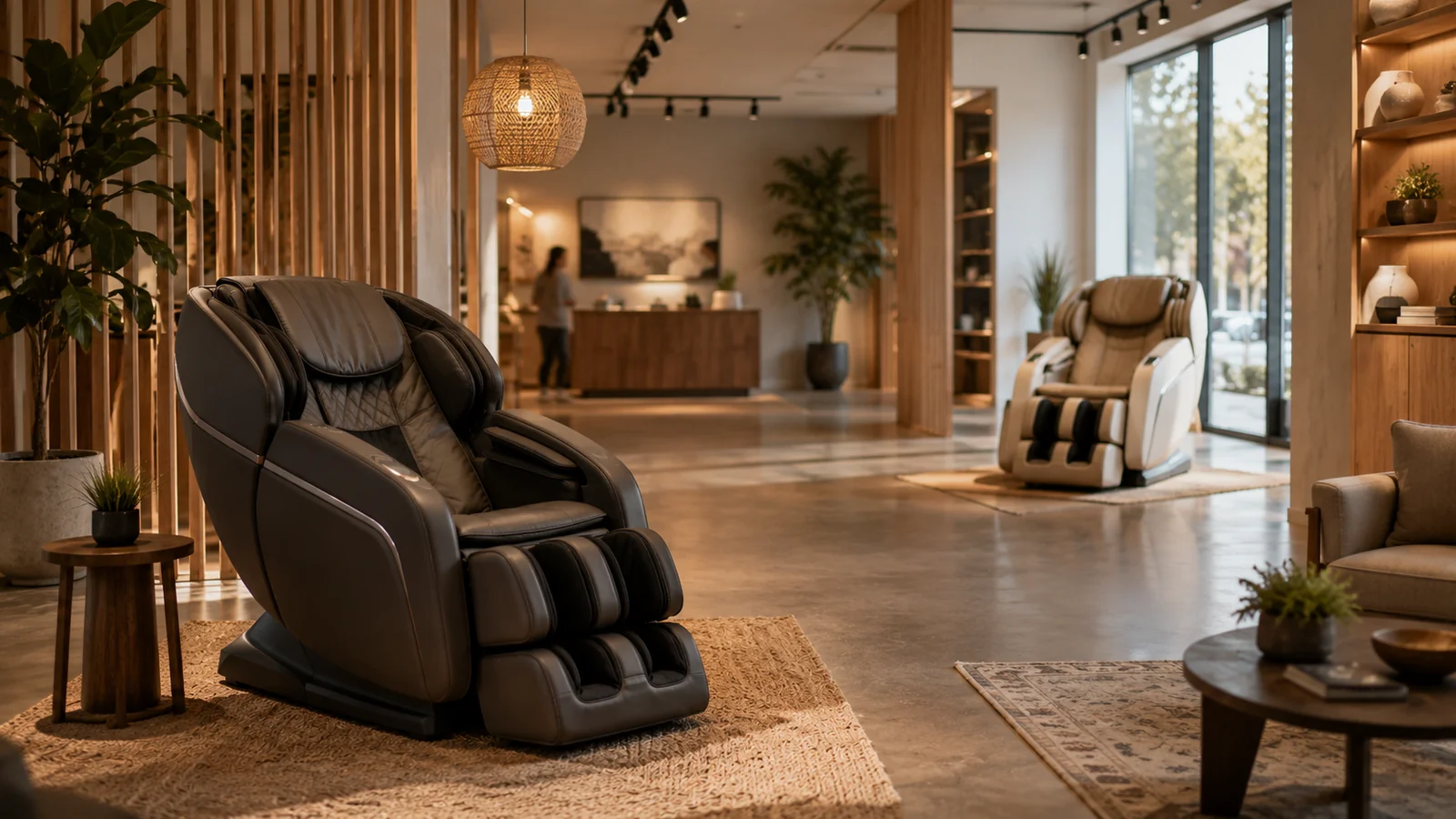
These regional guides can help whether you're shopping near San Jose, Santa Clara, Walnut Creek, Sacramento, Roseville, or Daly City. These are areas where readers commonly shop — not locations we operate, and any specific showroom we name is a public example to verify, not a universal endorsement. Use the same questions to compare any showroom before you visit.
MassageChairsTested.com is an independent guide. We do not sell massage chairs or operate a showroom — we help you compare them and visit with more confidence.
Brands & Models
Once you start shopping, the same brand names tend to reappear across showrooms, listings, and review sites. Recognizing them is useful — but a brand name alone won't tell you whether a particular chair fits your body, your space, or the way you want to be supported after the sale. The more reliable approach is to compare any brand or model against the same practical criteria.
While shopping, you may come across brands such as Bodyfriend, Cozzia, D.Core, Human Touch, Infinity, Koyo, Kyota, OHCO, Ogawa, Osaki, Panasonic, and Positive Posture. We list these alphabetically to help you recognize names in the market — not to rank, rate, or endorse any of them, and not to imply we have tested every brand or model.
Compare any brand or model on the same eight fronts:
A fair comparison treats every brand the same way. Start with how a specific chair feels for your body — comfort, body fit, and pressure preference are personal, so they matter more than the badge on the chair. Then look at the ownership picture: what the warranty covers, how service and delivery are handled, what recent reviews say, whether you can test the chair in a showroom, and how carefully the brand or retailer describes what the chair does. You can read more on how to approach massage chair brands.
The Short Answer
No single brand is right for everyone; the better question is how a specific chair compares on comfort, body fit, warranty, service, delivery, reviews, showroom access, and how its claims are worded.
Colophon · How this guide is made
MassageChairsTested.com is an independent guide. We don't sell massage chairs — we help you compare them and buy with more confidence. When our standards or methods are relevant, we link to them in the open so you can check our work.
How we decide what to publish, and the line we hold between guidance and selling.
How we approach reviews and comparisons, and what we will and won't claim.
The criteria we use when we describe what makes a showroom worth visiting.
How we stay independent, and how the site is funded and operated.
Why we treat health and wellness claims cautiously, and where to get medical advice.
How we handle mistakes, updates, and reader-flagged errors.
We update this guidance as products, retailers, and standards change. · Last updated: July 2026
Common Questions
Short, neutral answers to the questions buyers ask most — each links to a deeper guide if you want the full detail.
Because a massage chair is a high-ticket purchase, focus on three things: how it feels for your body, who you're buying from, and what support exists after delivery. Try a chair in person when you can, read reviews carefully, and review warranty and service terms. Treat any health or wellness claims cautiously and consult a healthcare professional about diagnosed conditions.
Open the massage chair buying checklistTrying a massage chair in person is one of the most useful steps you can take, because comfort, roller intensity, and body fit are highly individual and hard to judge from specifications alone. If visiting a showroom isn't possible, look for a clear return window and good setup support so you can still evaluate the chair at home with less risk.
Why trying a massage chair before buying mattersSit long enough to experience a full program rather than the first minute. Check that the recline, foot extension, and seat width fit your height and build, and notice whether roller intensity feels comfortable at the levels you'd actually use. Pay attention to ease of controls, noise, and how your body settles in after a few minutes.
Learn what to test before buyingLook for transparency and support: clear pricing, honest product and wellness claims, accessible customer service, and a verifiable track record. Independent reviews can show how a retailer handles delivery, setup, and problems after the sale. Because you may rely on that seller for warranty and service for years, retailer trust is worth weighing alongside the chair itself.
How to choose a massage chair retailerBoth can work; they trade off differently. A showroom lets you test comfort and fit in person before committing, while buying online can offer convenience and broader selection. If you buy online, prioritize a generous return policy, clear delivery and setup details, and responsive support. Many buyers test in a showroom first, then decide where to purchase.
Compare online vs. showroom buyingRead reviews critically by separating comments about the product from comments about the retailer, delivery, and service. Look for patterns across many reviews instead of reacting to one. Favor recent, detailed, verified reviews, since they better reflect current models and ownership experience. A single negative or glowing review tells you far less than a consistent trend.
How to read massage chair reviewsTreat health and wellness claims cautiously. Comfort and relaxation are personal experiences many buyers value, but specific medical-sounding promises deserve scrutiny — ask what evidence supports a claim before relying on it. A massage chair is meant for comfort and relaxation, not as a replacement for professional care, so consult a healthcare professional about any diagnosed condition.
Understand massage chair claim languageAsk what the warranty covers, for how long, and whether labor, parts, and in-home repairs are included. Confirm whether delivery means full in-home setup or just drop-off at the door. Find out how service requests and repairs are handled and how long they typically take. Clear answers before buying reduce ownership risk later.
Review the warranty, delivery and service guideFor diagnosed conditions, always consult a healthcare professional. Read our medical disclaimer.
Keep Reading
Each guide goes deeper on one part of the decision. Start anywhere — they're written to be read in any order.
A step-by-step checklist of what to bring, test, and ask before you commit.
Why an in-person test reveals comfort, body fit, and pressure preference specs can't.
The trust signals, service support, and transparency to weigh.
How to read wellness and medical-sounding claims and what evidence to ask for.
What real coverage looks like, how white-glove delivery works, and what to ask.
The trade-offs between testing in person and shopping from home.
A method for separating product, retailer, delivery, and service feedback.
What to look for when evaluating a showroom in California.
A neutral look at comparing brands fairly — names you may encounter, listed without ranking or endorsement.
Before You Buy
A massage chair is a high-ticket purchase, and comfort, fit, warranty, delivery and service all factor into it. Start with the checklist before you visit a showroom or buy online.
No sign-up required. MassageChairsTested.com is an independent guide and does not sell massage chairs.